Goals Before Tools: Reimagining and Rebuilding adultedtech.com
A reflection on selecting tools for adultedtech.com by first clarifying what the site needed to do, and why that mirrors learner-centered design in adult education.
Field Note | June 19, 2026 · Jerry H. Yamashita · 2 min read
AdultEdTech Stack
The tools, platforms, and workflow choices used to create and deliver this piece.A Starting Point
Rebuilding adultedtech.com brought me back to a principle we have emphasized in adult education for years:
Technology is not the starting point. Purpose is.
So, before choosing any tools, I tried to clarify what the site needed to do:
- make publishing easier, without adding cost
- hold both in-progress thinking and practical resources
- support discussion without turning site operations into a second job
- remain adaptable as the work evolves
Once those goals were clear, figuring out which tools might help achieve them became more straightforward.
Building the Tech Stack
The term “tech stack” comes from software development. It originally referred to the core technologies used to build and run a site or app (e.g., Front-End, Back-End, Database, Hosting). Over time, the term has broadened to mean the practical mix of tools and workflows behind a project.
In this context, I use it this way:
AdultEdTech Stack: the tools, platforms, and workflow choices used to create and deliver the work.

What Guided Selection
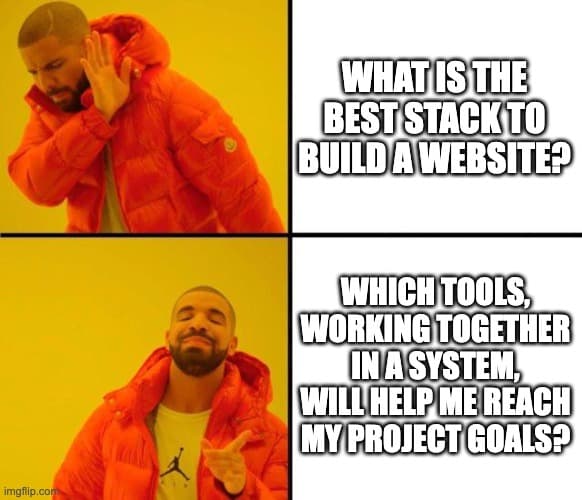
Tool selection criteria
I chose tools based on practical fit, not novelty:
- Purpose fit: Does it help achieve the outcomes I care about?
- Cost: Is it affordable now? As use grows?
- Learning curve: Can I use it well without a long onboarding period?
- Workflow fit: Does it work smoothly with my proposed or existing process?
- Reliability: Can I count on it for regular publishing and updates?
- Maintenance load: Does it reduce overhead rather than create more?
- Flexibility: Can I adapt or switch later without major disruption?
That led to:
- Next.js to run the website in a stable, flexible way
- Keystatic to make writing and publishing easier
- Markdoc to keep long-form content clear and well-organized
- GitHub to track changes and connect site content with discussion
- Cursor to build and revise the site more quickly
- Vercel to publish updates reliably without extra maintenance
Why This Matters (Beyond the Website)
This is the same logic we should apply when designing for learners.
In adult education, when tools lead and purpose is unclear, there's a high likelihood of losing that learner—at least for that activity. Why? Because adult learners want to know that what they are being asked to do is relevant to their own goals (Knowles, 1980)Knowles, M. S. (1980). The modern practice of adult education: From pedagogy to andragogy. Follet. https://colllearning.info/wp-content/uploads/2019/03/The-Modern-Practice-of-Adult-Education.pdfView in referencesOpen source (opens in new tab).
Design should begin with intended outcomes, learner realities, and contextual constraints. Tools should be chosen for their ability to address those conditions, not because they are trendy.
Where I Landed
This rebuild produced a stack that streamlines my workflow and helps me get from scratch to screen quickly.
More importantly, it reinforced a design principle I want to model publicly:
Design first. Tools second. Learners always.
In practice,Jerry
Related reading
- What are Tech Stacks? Choosing the Right One (opens in new tab)
geeksforgeeks.org
Comments
Sign in with GitHub to join the discussion. Each Lab post uses its own thread (linked by page URL).